

What Cicero can teach modern leaders about Gestures
What Cicero can teach modern leaders about Gestures
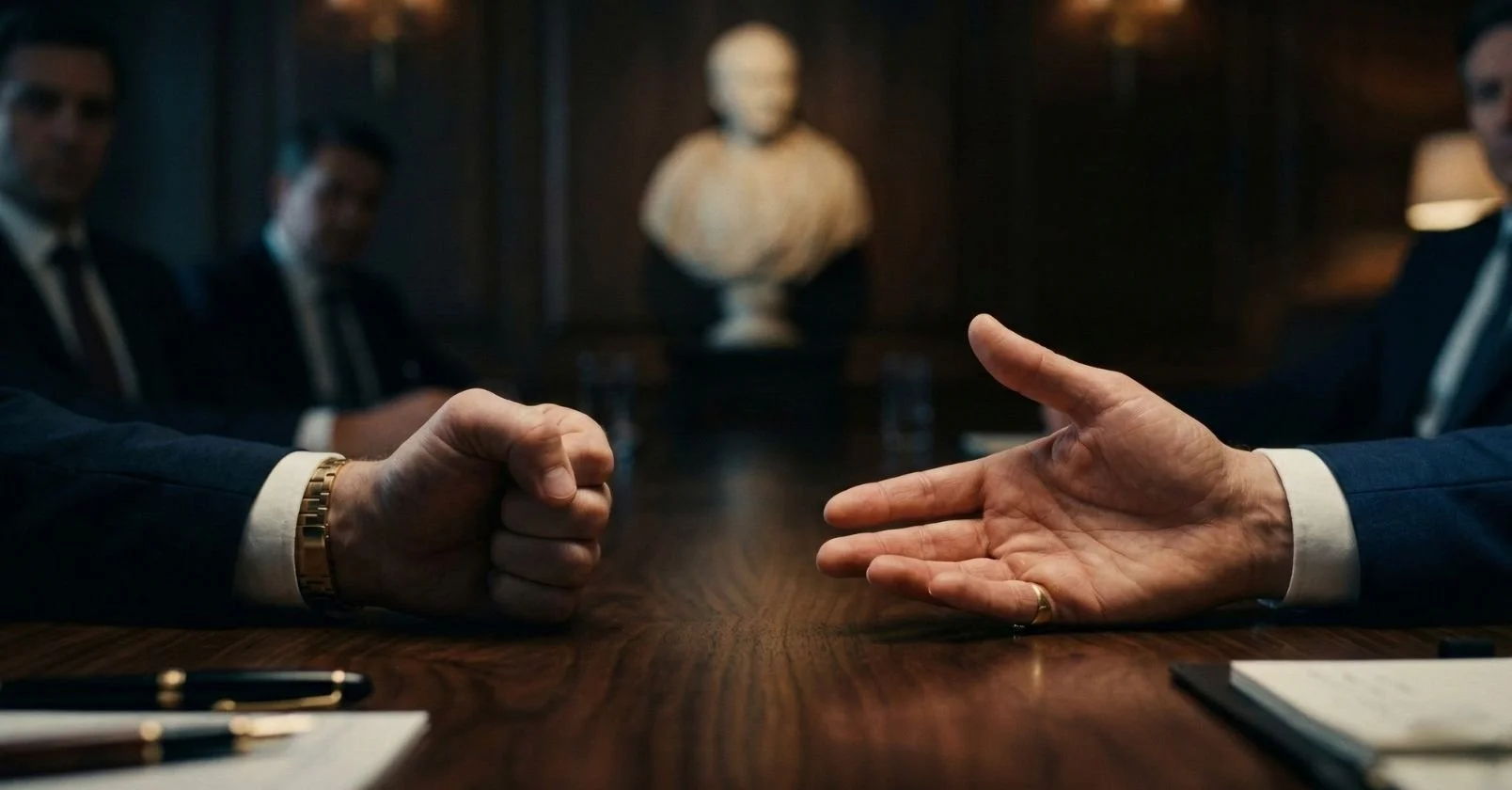
I have seen clenched fists that would make Rocky Marciano jealous. The problem is, they work in the boxing ring, they don’t work in the Boardroom.
And most people don’t even know they are doing it and don’t care. You should.
Looking for answers, remember, all roads lead to Rome and in De Oratore, Cicero makes it clear that communication is not just about what is said. It is about how thought is carried through the whole body. Gesture, expression, posture and eyes are not decorative extras. They are part of meaning itself.
And frankly, from my experience, I could not agree more.
We have all seen leaders whose words say one thing while their bodies stage a quiet coup. “I’m delighted to be here,” says the voice, while the arms clamp to the ribs and the eyes scan for an exit. The audience may not know why something feels off, but they know it does.
Cicero’s point was simple: gesture should support meaning, not distract from it. He did not want the speaker flapping about like a windmill in a crisis. Nor did he want what we might now call performance for performance’s sake. He warned against anything too theatrical, too fussy, too obviously acted.
Today, many professionals are told to “use your hands more” as though communication were a pasta recipe. But Cicero would say the question is not whether your hands move. The question is whether the movement expresses the thought.
For him, a good gesture was purposeful, measured and dignified. The body should strengthen the message, not compete with it. If the point is serious, the body should carry seriousness. If the message is calm, the movement should not look like you are landing a plane in crosswinds.
Penny Wong, this week on the ABC Insiders program, was a good case in point. She placed information in spaces around her and referencing the past and different sides of the body for different perspectives. Nothing was flamboyant. Everything was congruent.
In moments of pressure, people do not just listen for information. They look for steadiness. They look for coherence. They look for signs that the person in front of them believes what they are saying and can carry the weight of it.
That is why gesture is not really about hand technique. It is about alignment.
When words, voice, face and body all tell the same story, a leader appears clear, credible and grounded. When they do not, confidence starts to wobble.
So what does Cicero offer the modern executive?
Stand with presence. Move with purpose. Let your gestures arise from conviction, not choreography. Keep the hands useful, not busy. And never forget that your body is often doing more of the talking than your mouth.
Two thousand years later, the lesson still holds.
People do not only hear leadership.
They see it.
Love,
Dr Louise Mahler