

How to Prepare for Leadership Communication when there’s No Time
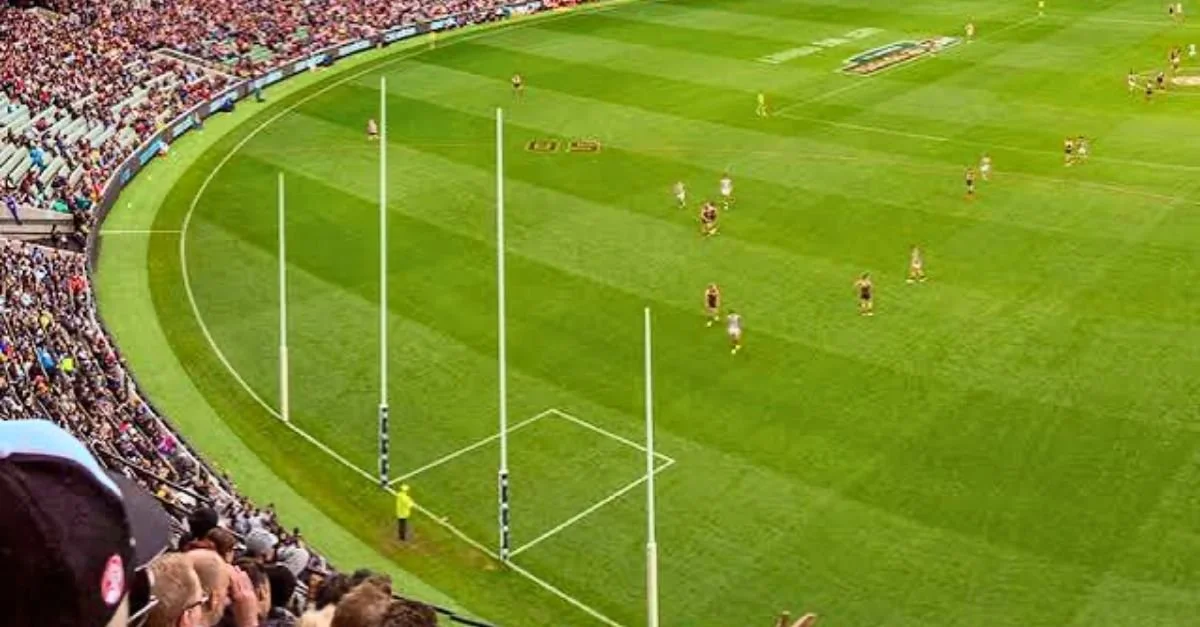
Imagine Fremantle turning up to the AFL Grand Final next Saturday having decided the goalposts were actually on the sides of the ground.
They might play magnificently.
They might run hard, tackle beautifully and demonstrate extraordinary athleticism.
They would also lose.
And yet this is exactly what I see senior leaders doing with communication. They are working very hard — at the wrong game.
One phrase I hear constantly from CEOs is:
“I don’t have time to prepare.”
One executive recently told me, with some horror, “I only found out about the media interview this morning!”
Yes.
That’s leadership.
Once you reach senior levels, your time becomes precious, the demands become unpredictable and the chances of someone giving you three clear days to prepare your thoughts, practise your delivery and have a nice lie-down beforehand are approximately zero.
It ain’t gonna change.
So perhaps we need to change what we mean by preparation.
There are two kinds of preparation.
The first is what most people do.
An event appears in the diary and they start from scratch.
What am I going to say?
How am I going to say it?
What if they ask me this?
What if they ask me that?
Then, in a final act of desperation, they write out whole sentences and try to remember them word for word.
Gasp with horror.
I once worked with an extraordinarily intelligent global CEO who told me he had reached the point where he simply couldn’t do it anymore.
Of course he couldn’t.
The problem wasn’t his intelligence. He was playing the wrong game.
Leadership communication is not an exercise in remembering clever sequences of words.
You are not there to regurgitate data to prove how clever you are.
You are there to manage the psychological state of the people listening.
That requires structure and delivery.
And neither should be invented five minutes before you walk into the room.
Stop reinventing the wheel
There are frameworks for almost every difficult communication task a leader faces.
Presenting an idea.
Answering a simple question.
Handling emotion.
Giving difficult feedback.
Speaking to a board.
Responding under pressure.
Apologising.
The Ancient Romans worked on these things. Psychologists have worked on them. The medical profession has worked on them. Great communicators have been refining them for centuries.
I have spent years collecting these frameworks and turning them into practical structures leaders can actually use.
Because when pressure hits, you don't suddenly become more brilliant.
You tend to become more you.
And unfortunately, under stress, “you” may become defensive, verbose, aggressive, apologetic, evasive or strangely fascinated by your shoes.
Remember Scott Morrison’s infamous response during the bushfires:
“I don’t hold a hose, mate.”
Ben Carroll fell into the same pit this week with “I’m not the Roads Minister”.
Whatever the intention, the line became bigger than the explanation.
That is what happens when a leader under pressure reaches for a psychological defence rather than a communication framework.
Oops.
Then there is delivery
The second part of preparation has nothing to do with words.
It is your eyes.
Your posture.
Your breath.
Your voice.
Your gestures.
Do you know what happens to you physically under pressure?
Does your voice speed up?
Do you stop breathing properly?
Do your eyes dart around the room?
Do your hands suddenly develop an independent life of their own?
And, more importantly, do you have the skills to override those responses when they appear?
That work is not done on the morning of the media interview.
It is done months or years beforehand.
That is preparation.
You build the skills once so they are available when you need them.
I had to take my own advice
This week I MC’d the Women in Banking and Finance National Industry Awards at the ICC in front of 800 rather important people.
I keynote. I don’t normally MC.
So there was a moment when I could have sat down and started inventing the wheel.
Instead I told myself:
“Don’t recreate the wheel, Louise.”
Out came the frameworks.
Structure. Engagement. Transitions. Energy. Audience management. Finish.
Bingo.
Invited back next year.
The work works.
Prepare once. Use often.
So when leaders tell me they don’t have time to prepare, my response is increasingly:
Good. Stop preparing from scratch.
The real preparation for leadership communication happens long before the meeting, presentation, interview or crisis arrives.
Know your frameworks.
Know your stress responses.
Train your voice.
Train your body.
Know how to structure an answer when somebody throws something unexpected at you.
Then, when the call comes at 8.30am saying you are on camera at 10, you are not beginning from zero.
You are drawing on skills already embedded.
The Ancient Romans began this training in their teenage years.
Most of us have left it a little later.
The good news is that it isn’t rocket science.
If you are intelligent, motivated and prepared to learn, you can catch up surprisingly quickly.
But first, you have to know where the goalposts are.
Love,
Dr Louise Mahler