

How to Communicate Effectively: Moving Beyond the Body Language Trap
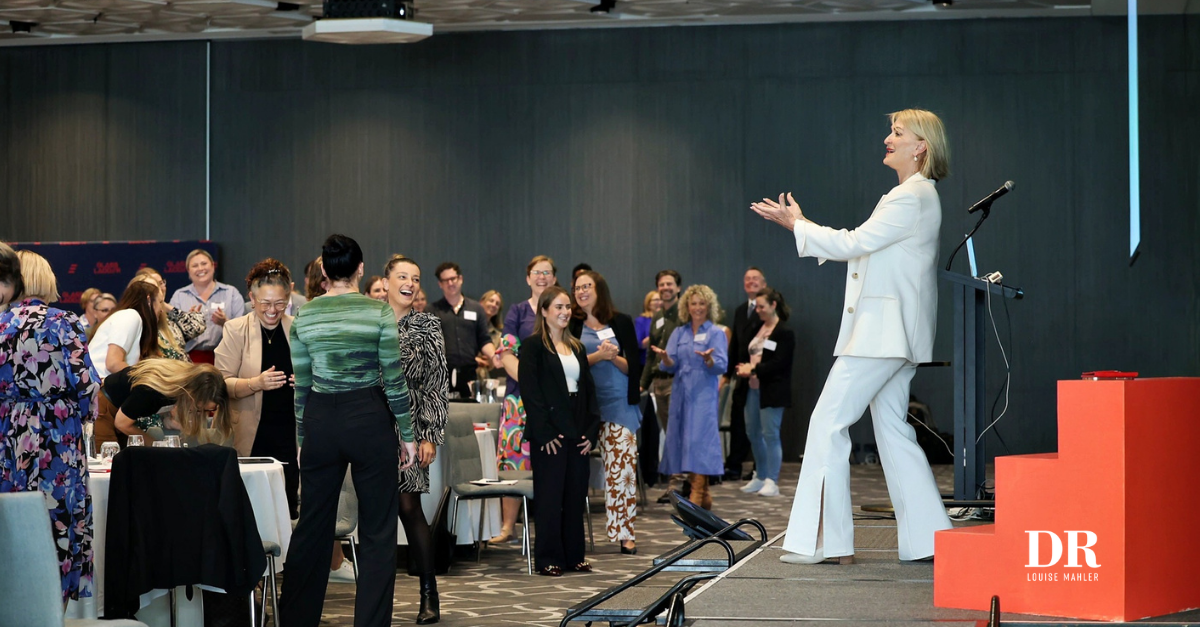
I have spent my life in the field of communication and, suffice to say, it has served me rather well.
But in recent years, I have watched something strange happen. Communication, as a discipline, has started to shrink.
And the question is: why?
Communication has never simply been about “looking confident” or “reading someone’s crossed arms”. At its best, communication is about understanding what is really going on: the people, the politics, the mood, the moment and the message. It is about bringing your best self to create trust, respect and understanding.
In other words, communication is not decoration. It is not a theatre. It is not a set of tricks. It is the skill of getting the right result, in the right way, preferably the first time.
That requires much more than body language.
It requires psychologically sound frameworks for difficult conversations. It requires skill in the body, gestures and voice. It requires memory techniques, so you are not chained to notes like a prisoner awaiting sentencing. It requires the ability to think, structure, speak, listen and respond.
And yet, somewhere in the second half of the twentieth century, communication in the Western world became confused.
Gesture, which had been studied for thousands of years as a foundation of public speaking, became almost suspicious. Perhaps this was partly the shadow of the twentieth century itself. Hitler and Mussolini used extreme gestures in their political performances, and suddenly the moving hand became associated with manipulation, theatre and danger.
So, the hands went into hiding.
Then came the 1980s.
And oh, what a decade. Shoulder pads, perms, aerobics videos and body language.
In Australia, Barbara and Allan Pease helped popularise body language through their bestselling work, and the whole world became fascinated. Suddenly, we all “knew” that folded arms meant defensiveness, the direction of your feet revealed your true interest, and leadership required a voice that was low, slow and loud.
It was fascinating. It was fresh. It was easy to grasp. And that, perhaps, was the problem.
Body language became the shorthand for all communication. It was everywhere. Courses were built around filming participants, playing the videos back, and analysing every twitch, lean, blink and swivel of the chair. Improvement became less about building skill and more about seeing yourself as others might see you.
Now, awareness is useful. Of course it is.
But one bright light can eclipse another sun.
The fascination with body language gradually pushed the wider field of communication into the shadows. Gesture became laughable. Structure was ignored. Voice was left to fend for itself in the wilderness. Breath disappeared. Memory vanished. And leaders began to sit motionless in meetings or stand like statues behind lecterns, terrified of being judged.
Then came the backlash.
By the 1990s, “authenticity” became the great war cry.
Courtney Cox captured the mood beautifully when she said, “Honesty is the key to a relationship. If you can fake that, you’re in.”
And there it was.
Suddenly, anything trained, practised or developed was at risk of being labelled fake. Communication training became suspicious. Body language remained fascinating, but there was now mistrust around the idea of deliberately improving how we speak, move or lead in front of others.
I see the legacy of this every week.
Leaders come to me saying they want confidence. They want impact. They want presence. They want to stop rambling, mumbling, shrinking, rushing, apologising and over-explaining.
And then comes the sentence:
“I just don’t want to be inauthentic.”
There it is. The haunted house of modern communication.
We have become so obsessed with authenticity that we now use it as an excuse for poor habits.
“I’m just not good at speaking.”
“I naturally talk too fast.”
“I don’t use gestures.”
“I need notes.”
“I don’t like being videoed.”
“I’m just being myself.”
Well, yes. But sometimes “being yourself” simply means repeating a habit you learnt twenty years ago in a meeting room with bad lighting and worse sandwiches.
Authenticity is not a prison sentence.
It is not a fixed set of behaviours you must drag around for life like an old suitcase with a broken wheel. Authenticity includes your habits, yes, but habits can be changed. You can still be entirely yourself and become more skilled, more grounded, more expressive and more effective.
As for me, I am often introduced on television or radio as a “body language expert”. The moment that happens, everyone folds their arms, asks me how to spot a liar, then accuses me of teaching people to “fake it till they make it”.
We laugh. It is what they want.
After all, what do you feed an 800-pound gorilla?
Whatever it wants.
Body language is fun. It is interesting. It gives people something to notice. And yes, it matters.
But it is not the whole game.
Communication is much, much bigger than body language.
The ancient concept of gravitas gives us a better frame. Classical rhetoric was built around five canons: invention, arrangement, language, memory and delivery.
That is the real field.
What do you say?
How do you structure it?
What words do you choose?
Can you remember it?
And how do you deliver it through your body, voice, breath, gesture and presence?
That is communication.
Not tricks. Not fakery. Not a desperate attempt to control what everyone thinks of you.
It is the disciplined pursuit of connection.
So, here are the new rules.
Authenticity is not fixed. It is a set of habitual patterns, and those patterns can change.
We are not communicating to pander to the perception of others. We are communicating to connect.
Learning requires specific feedback, in the moment, on the skills that matter.
Feedback should help you bring your best, not make you obsess over every minor movement like a meerkat on caffeine.
And confidence is not the starting point. Confidence is the result.
Confidence comes from competence. That is the work now.
It is time to move beyond the haunted legacy of body language and return to the full discipline of communication.
It is time to fill the Gravitas Gap.
Let me hear your thoughts.
Love,
Dr Louise Mahler