

How Kamala Harris won the battle of the body language
US presidential debates are about moments, not the discussion itself. To make a debate memorable, a candidate must be able to create a moment that captures the public’s attention.
There is no better example of this than Ronald Reagan, whose age had become a significant issue ahead of the second debate against Walter Mondale in 1984 until he delivered the classic line: “I am not going to exploit, for political purposes, my opponent’s youth and inexperience.”
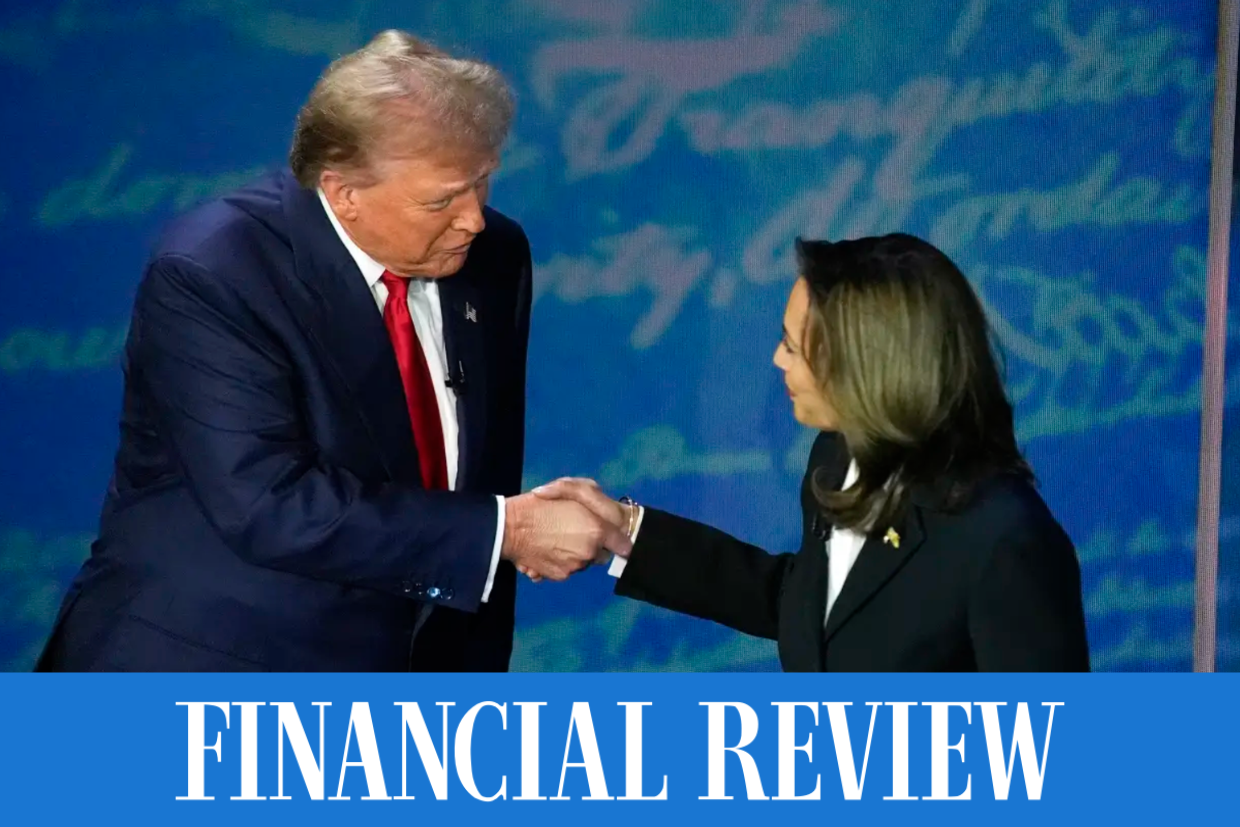
Donald Trump had not expected the pre-debate handshake with Kamala Harris. AP
Even Mondale laughed, conceding in later years that this was the moment he knew he had lost the election.
In the aftermath of the Harris-Trump debate, I think neither candidate delivered the memorable moment that will outlast this election cycle.
Trump loves creating these moments. But he tried and failed repeatedly, cut down by the moderators as he raged claims of immigrants eating cats and dogs and post-birth abortions – the latter going down like a cup of sick.
Harris played it safe for the most part, kept to topic and landed her well-rehearsed answers, taking the opportunity to laugh and shake her head as Trump hit the rant button.
For Harris, the debate was not about memorable moments, but an opportunity to send a message to Americans still making up their mind that she is presidential and can stand strongly against the pressure of an aggressive opponent.
For Trump, it was an opportunity to play with what he considered a mouse in a trap.
Instead of the strong, confident, playful performer of the past, we saw an angry old man full of hyperbole and excuses.
Any resemblance to a mouse from Harris was erased almost immediately as she confidently strode onto the stage reaching her hand forward, and moving into Trump’s space with her eyes fixed strongly in an act of assertion and confidence – heralding that she was an opponent not to dismiss.
Moving to the lectern, Harris smiled widely from the start and despite the stress showing in a dry mouth, kept her body upright and free, moving from a sideways position while listening, turning strongly to face the camera while speaking.
Her head was free in its movement, and her hands were visible with the “palms of trust” held confidently forward – it was a perfect beginning.
The same could not be said of Trump. Something was not right. This was not the confident Trump we have come to know.
He was hunched and set solid in a combative stance, barely moving from a frozen forwards tight position, leaving us with a full view of his front bottom teeth, signifying anger – a snarl that alternated with a tight jaw and bottom lip pulled high over his teeth up to his nose.
Glaring ahead with tight eyes, Trump never looked at Harris. Whilst giving the appearance of being dismissive of her, this was incongruent with the unusual vulnerability he showed, biting at her every statement.
His frustration was obvious as he yelled and used strong language laced with words like dangerous, criminals, destroyed, insane, hate, radical, bad, vicious, violent, fired and horrible.
It was a stressed and almost childish display. When chastised by the moderators for stating falsehoods, a petulant Trump would mumble that this is what he has heard or been told.
Instead of the strong, confident, playful performer of the past, we saw an angry old man full of hyperbole and excuses.
In contrast, Harris was a picture of control, baiting Trump, and had him take the bait at every turn. No matter the issue, immigration, cost of living – Harris would needle, and he would react – setting off on angry rants about his rallies, political record, supporters and wild claims around immigrants.
Harris was well prepared and executed her plan for the debate to perfection. Her strategies worked and if the plan from Trump’s team was to sit back and watch Harris flail under his light, then that failed miserably.
With no memorable moment to be seized upon, Trump supporters will claim it was rigged, whilst hardcore Democrats will create memes around cats and dogs and declare the election over.
Neither of these groups matter. Debates are not for them, but for independent voters who are yet to make up their minds.
This is the group of most concern to the Harris campaign, with polling suggesting that around a third say they do not know her well enough to vote for her. Moving the needle a few per cent with this group may ultimately prove the difference in a tight race.
Whether she achieved that goal, only time will tell. But right now, Harris has the momentum and how Trump attempts to wrest it back his way will be fascinating in the weeks ahead.