

Trump may be tired, but we are exhausted
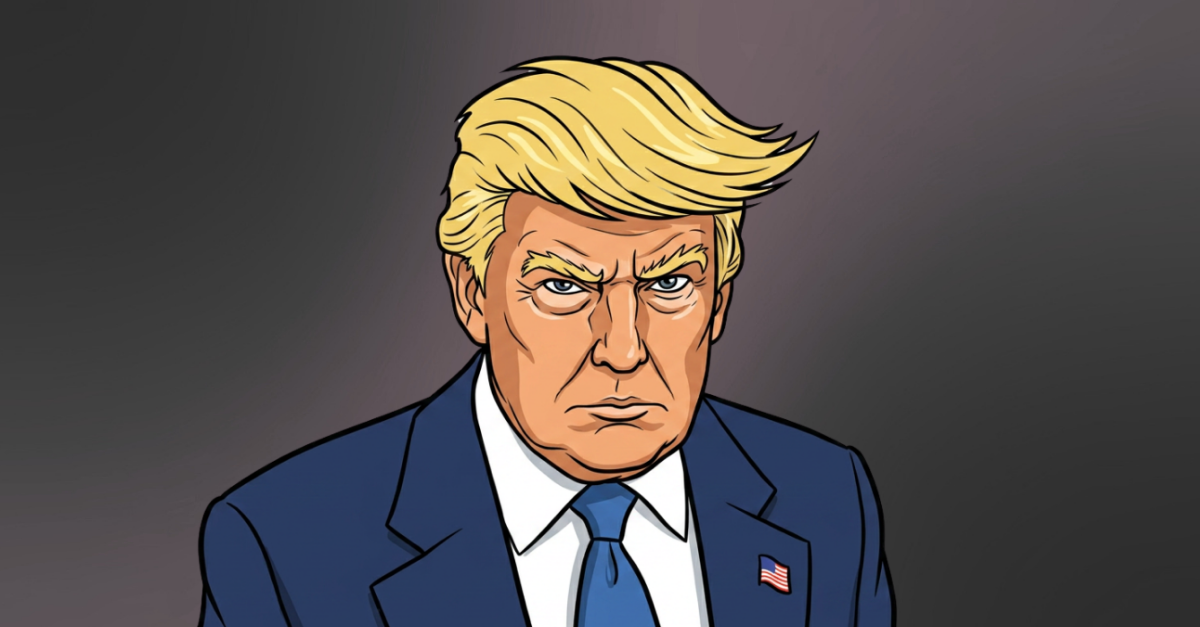
At a White House announcement on American nuclear innovation on July 24, Trump sat behind the Resolute desk with flattened hair, swollen-looking eyes and the expression of a man who had been invited to an early breakfast he had specifically declined.
Days earlier, at the FIFA World Cup final, he appeared slower, more hunched and less physically commanding than the Trump we have come to expect. The trademark entrance remained, but the machinery looked as though it could have used a service.
This matters because Trump is not a retired businessman being photographed at the golf club. He is the President of the United States, presiding over decisions involving nuclear weapons, wars, markets, alliances and the architecture of global power.
So, what does tired mean?
And can it be understood by considering age, poor health, cognitive decline, decision fatigue, frustration — or the physical cost of carrying one of the most demanding jobs on earth?
Is it age?
Age is the obvious explanation.
Now at 80 years old, Donald Trump, became the oldest person in American history to become president upon his second inauguration in 2025.
Some mental processes slow as people grow older, particularly processing speed, working memory and the ability to deal rapidly with unfamiliar complexity. But decision-making does not decline in one neat, straight line.
Research suggests some capabilities weaken, while others remain stable or improve. Experience can reduce the mental load of familiar decisions. Older adults may also draw on pattern recognition, accumulated knowledge and, in some circumstances, better emotional regulation.
In other words, an older leader may be slower when confronting a completely novel problem but faster when recognising a situation they have encountered repeatedly.
That distinction matters.
Trump is not inventing his leadership style each morning over breakfast. He works from deeply embedded formulas.
He enters with music and movement. He recognises the audience. He flatters them. He establishes a winner, identifies an enemy and launches into superlatives. His sentences are short. His language is absolute. His favourite rhetorical structure is the tricolon: three words, three claims, three escalating blows.
It is not subtle, but neither is a short sharp kick.
These patterns reduce cognitive demand because they are rehearsed. Trump may look depleted while still operating effectively within the system he knows.
Is it poor health?
The most recent public report from the White House physician, issued after an examination in May, described Trump as being in “excellent health”.
At 191 centimeters and 107 kilograms, Trump's body mass index of 29.5 registered on the higher end of overweight BMIs. We’ve seen worse.
He is said to sleep about four to five hours a night, does not drink and his regular exercise is golf.
We can say that he sometimes looks tired, but we cannot responsibly leap from an eye bag to a neurological conclusion.
Fatigue itself is not mysterious. It can reduce vigour, attention, reaction time and accuracy. Yet fatigue is also variable. A person may appear depleted at one event and recover after rest, food, stimulation or a change of task.
And motivation matters, something Trump has in industrial quantities. Whatever one thinks of his decisions, he remains driven by clear goals: winning, dominance, recognition, legacy and control of the room. Strong motivation can sustain performance long after a less invested person would have quietly found a sofa.
Is it decision fatigue?
Then there is decision fatigue: the idea that repeated difficult choices progressively push people towards simpler, more familiar or less effortful decisions.
The presidency provides a magnificent laboratory for it.
Imagine moving from Iran to interest rates, from tariffs to troop movements, from an intelligence briefing to a television camera, with every answer carrying consequences and every hesitation becoming international content.
But decision-making has never appeared to be Trump’s central difficulty. We may dislike his decisions, fear them or find them impulsive, but a reluctance to decide is hardly his signature problem.
He decides. Often loudly. At his weekly update last week he cried “If you have any problems, I’ll come straight back and figure those problems out”.
Our analysis reaches the same dead end.
We are not really objecting to how tired Trump looks.
We are objecting to what Trump does.
The person who may be exhausted is you
Trump occupies an extraordinary amount of our emotional and intellectual bandwidth, something Trump supporters have labelled “Trump Derangement Syndrome”.
Every gesture becomes evidence. Every stumble becomes a diagnosis. Every exaggeration becomes a panel discussion. Every post creates another round of outrage, defence, analysis and outrage about the analysis.
Now we have something closer to what is being called “Trump Exhaustion Syndrome”.
The symptoms are familiar: numbness, irritability, compulsive checking, instant judgement and the vague sense that we have already had this argument 4,700 times.
The Reuters Institute’s 2026 Digital News Report found that 40 per cent of Australians sometimes or often avoid the news. Globally, the figure is 42 per cent, compared with 29 per cent when the measure began in 2017. Interest in news has also fallen sharply since the pandemic.
Trump did not create every part of this exhaustion, but he is exceptionally gifted at exploiting it.
We have become unpaid interns in the Trump attention factory.
That is the trap.
Australia must recover its attention
Australia cannot ignore the President of the United States. Our defence, trade, security and diplomatic interests make that impossible.
But attention is not the same as fixation.
We need to assess American decisions calmly, prepare for their consequences and strengthen our alliances.
The more strategically independent response is to ask what his presidency requires of us.
What relationships must Australia build beyond Washington?
Where are we still waiting for America to provide certainty that may never arrive?
Trump may be old. He may be tired. He may be frustrated, overloaded or simply having a bad day under unforgiving lighting.
After rest, he may recover.
The question is whether we will.
Australia’s task is to stop allowing one man, however powerful and theatrical, to monopolise our attention.
Watch him carefully. Challenge his decisions. Prepare for the consequences.
Then turn the camera around.
Love,
Dr Louise Mahler