

Seriously, it’s not that hard.
This week I delivered a keynote on a topic that is becoming increasingly important to every organisation on the planet.
Communicating in a World of AI.
The organisation had a familiar challenge.
Its people were working in silos. They were geographically dispersed, increasingly reliant on technology and communicating through screens, emails, messages and digital platforms.
And somewhere along the way, something rather important had disappeared.
Communication.
Oh, there was plenty of information being exchanged. Reports were written. Updates distributed. Meetings scheduled.
But actual human connection?
Not so much.
And this is not an isolated organisational problem. It reflects something much bigger happening across society.
The 2026 Edelman Trust Barometer identifies a disturbing trend towards what it calls 'insularity'.
We are retreating into ourselves.
In fact, the research reveals that 70 per cent of people globally are unwilling or hesitant to trust someone whose values, beliefs, background or approaches differ from their own.
Think about that.
We have more sophisticated communication technology than at any point in human history, yet we are increasingly reluctant to connect with people outside our familiar circles.
And now we have AI accelerating the process.
Which brings me to the magnificent irony of my experience this week.
The theatre of the absurd
My keynote followed the organisation's business update.
And I have to tell you, no expense had been spared.
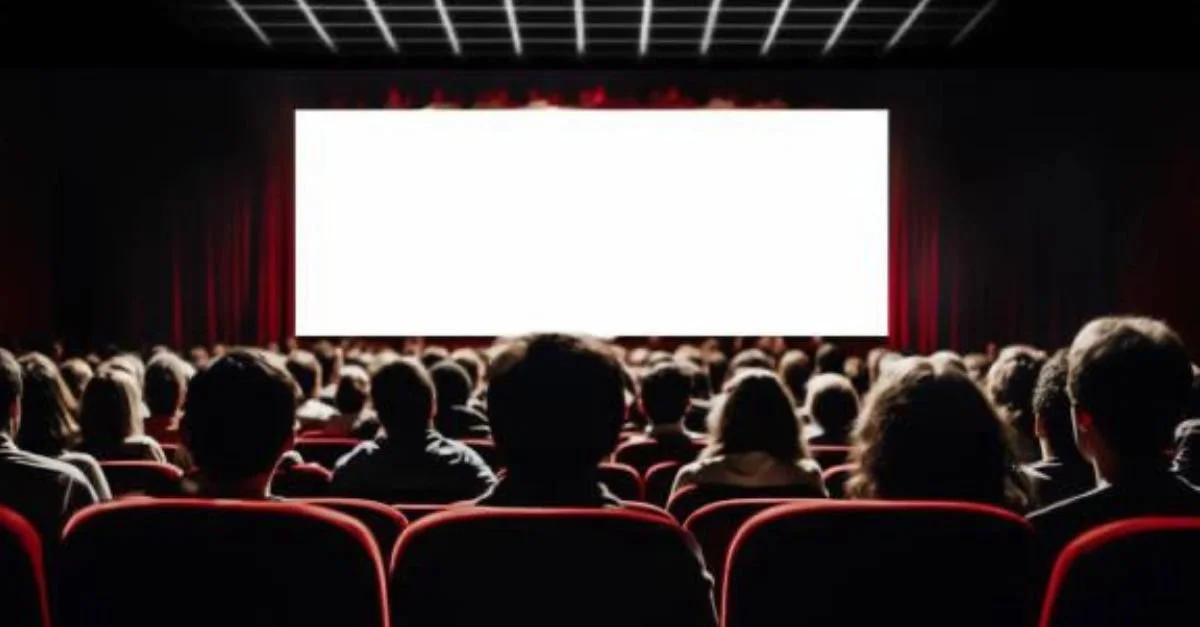
We were in a glamorous picture theatre. Beautiful seating. Extraordinary sound. A screen the size of a small suburb.
Very impressive.
And there's your first warning.
PowerPoint doesn't sell. People sell.
So where were the presenters?
Well, down the front of this enormous theatre, in almost total darkness, stood a lectern approximately the size of a horse.
Behind it, a presenter.
Or at least I assumed there was a presenter.
There was certainly a voice.
There was also a static microphone, ensuring that whoever was speaking remained firmly anchored behind the aforementioned horse.
The screen towered above them, displaying slide after slide of information.
The presenter occupied approximately one-hundredth of the available visual space.
And because their body was hidden and their face was in darkness, their contribution to the visual impact was perhaps closer to one-thousandth.
No visibility. No movement. No human impact.
I had an internal fit.
Here was an organisation concerned about disconnection, investing considerable money in bringing its people together, only to arrange the room so that the human beings communicating were practically invisible.
You couldn't make it up.
Houston, we have a problem
I immediately went searching for a lapel microphone.
No lapel.
Well, actually, there was one, but it was being used to transmit the presentation to audiences in Melbourne and Brisbane.
Of course it was.
We had successfully connected the technology across three cities while disconnecting the human being from the people sitting directly in front of them.
And this is where I think we are getting leadership communication terribly wrong.
We have become obsessed with transmitting information rather than creating an experience.
We spend fortunes on screens, software, production, slides and increasingly AI-generated content.
And then we forget the person.
The voice. The face. The body. The energy. The relationship.
The very things that make communication human.
I need to see you, hear you and feel you
For leaders, I believe there are three fundamental requirements for genuine connection.
Firstly, I need to SEE you.
Not a silhouette behind a lectern.
I need to see your face, your expression, your gestures and your physical presence.
Our bodies are not inconvenient accessories to our PowerPoint presentations. They are fundamental instruments of communication.
Secondly, I need to HEAR you.
And I don't simply mean sufficient volume.
I mean a voice that carries meaning, intention, variation and conviction.
A voice that is alive.
A voice that doesn't sound like someone reading the terms and conditions of a car insurance policy.
Your voice is a choice, and it can either build connection or destroy it.
Thirdly, I need to FEEL you.
This is where the magic happens.
I need to sense that you are present, engaged and interested in the people before you.
That you are not merely delivering content but creating a relationship.
That you are aware of the room and willing to respond to it.
This is Gravitas.
Not performance for performance's sake, but the capacity to create trust and respect through your presence.
And here comes AI
AI can produce your slides, organise your thoughts, analyse your data and draft your speech.
Wonderful.
But it cannot stand in that room as you, take responsibility for your message and build the human relationships on which leadership depends.
And therein lies the opportunity.
As technology becomes increasingly capable of delivering information, the distinguishing skill of leadership will not be the ability to produce more content.
It will be the ability to create more connection.
So, next time you organise a leadership event, consider spending a little less time worrying about the size of the screen and a little more time considering the visibility of the human being standing beneath it.
Move the lectern.
Turn on the lights.
Free the speaker to move.
And for heaven's sake, let us see the person!
Because in a world of artificial intelligence, human connection is not an optional extra.
It is the competitive advantage.
And seriously, it's not that hard.
PS I walked into the audience and worked the audience like a circus horse. Don’t try this at home. It’s not for the uninitiated.
Love,
Dr Louise Mahler